November 4, 2026
I Never Thought Earning a Law Degree Meant My Learning Was Finished
By James Record
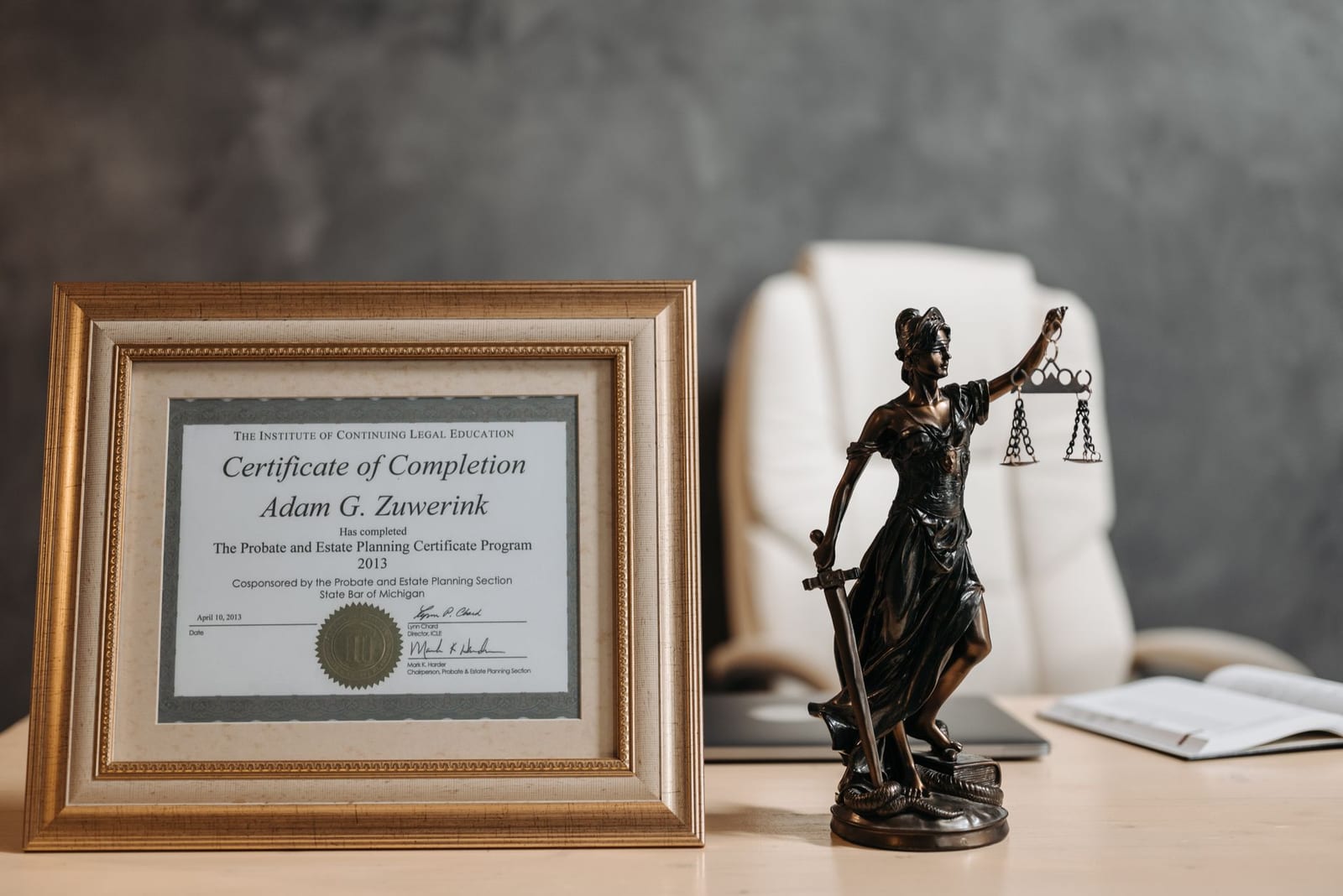
Earning a law degree is a significant accomplishment, and I would never minimize the amount of work it takes to get there. Law school requires years of reading cases, understanding legal principles, developing arguments, and learning how to approach problems differently. When I earned my JD from Thomas M. Cooley Law School in 1989, I had completed an important part of my education and was prepared to study for the Bar Exam and hopefully begin practicing law. What I did not believe then, and certainly do not believe now, is that receiving a law degree means my learning is finished.
In many ways, becoming an attorney showed me how much more there was to learn. There is a difference between studying the law in preparation for practice and learning how those principles are applied to real circumstances. The first provides the foundation, while the second continues throughout an entire career. Some of that education comes formally, but much of it comes from experience, new case law, developments in forensic science, new forms of evidence, changing social norms, and situations that force you to reconsider something you thought you already understood.
After years of working in criminal law and teaching criminal justice, I am more aware than I was when I first earned my law degree of the need to keep learning.
Law School Gives You the Foundation for What Comes Next
Law school taught me how to read cases, identify legal issues, analyze facts, and understand the reasoning behind legal decisions. Those skills were essential when I entered the profession. Still, I quickly discovered that analyzing a case that has already been decided is different from working through circumstances that are still unfolding.
My experience as an Assistant Ocean County Prosecutor brought that difference into focus. I later gained criminal defense experience as well. In both settings, the facts did not arrive in the convenient form of a law school assignment. No professor pointed to the issue that deserved the most attention. You had to understand the information available, recognize which legal issues it raised, and determine what additional information needs to be scrutinized.
Criminal procedure became particularly interesting to me for this reason. In school, you can study the rules surrounding searche & seizure, interrogations, evidence, and constitutional protections. In practice, you begin to appreciate how much can depend on the particular sequence of events. A small factual difference can sometimes affect how a legal principle applies, and something that initially appears unimportant may become more significant once additional information is available. Every case is different. Having the ability to recognize the differences and what issues need further attention creates the constant need to learn.
That experience taught me that my legal education did not simply end when my formal schooling did.
Experience Is Valuable, but It Can Also Make Us Too Comfortable
One challenge of spending years in any profession is figuring out how much to trust your experience. Experience should make an attorney better at recognizing patterns and identifying important issues. Spending decades in a profession would have little value if you had to approach every situation as though it were completely unfamiliar.
At the same time, familiarity can create its own problems. When you have encountered similar circumstances many times, it becomes easy to tell yourself that you have seen a particular issue before and already know what law applies. Sometimes that instinct is correct. Experience can help someone recognize an important issue much faster than they could have earlier in their career. The danger comes when recognizing a familiar issue prevents us from noticing what is different about the situation in front of us.
I have tried to remain aware of that tension throughout my career. When something feels familiar, I always think there is value in considering whether the relevant facts are actually the same, whether new case law has developed, or whether new information changes the analysis. Experience should make us more capable, but never less curious.
Forensic Science Reinforced the Need to Keep Learning
My interest in forensic law has made this particularly clear. I am affiliated with the American Academy of Forensic Sciences through its Jurisprudence section, and the relationship between scientific evidence and the law is an area where continuing education becomes especially important.
Scientific evidence can play an important role in criminal matters, but understanding that evidence requires more than recognizing a scientific term. Different forensic disciplines use different methods and have different limitations. How a particular form of evidence is collected, tested, interpreted, and presented can affect how it should be understood and accepted by a judge and jury.
An attorney does not need to become a laboratory scientist to work with forensic evidence, but an attorney does need to understand enough to ask informed questions. That means learning how particular tests work, what conclusions it can reasonably support, where uncertainty exists, and whether the scientific understanding surrounding a method has changed over time.
I think there is an important professional lesson in being willing to admit when you need more information. Attorneys are often placed in situations where people expect immediate answers. Experience may make it tempting to provide one immediately. In some circumstances, however, the better decision is to recognize that the subject requires more study before developing a conclusion.
Criminal Procedure Continues to Develop
Criminal procedure provides another reason legal education cannot remain fixed. The fundamental constitutional principles may be longstanding, but courts continue interpreting how those protections apply to changing circumstances. The environment in which investigations take place has also changed considerably during my career.
Information now exists in forms that were not part of ordinary life when I first studied law. Methods of collecting, preserving, examining, and presenting evidence continue to develop. These changes can create new factual circumstances even when the underlying legal questions remain familiar.
For me, that is part of what keeps criminal law interesting. Questions about government authority, individual rights, evidence, fairness, and due process remain central to the justice system, but the circumstances around them continue to evolve. An attorney who relies entirely on what was learned decades earlier risks understanding the principle while missing how it applies today.
Keeping up with those developments is not separate from practicing law. I have always viewed it as part of the responsibility that comes with the profession.
Teaching Has Given Me Another Reason to Keep Learning
Moving into criminal justice education changed my relationship with learning again. It's easy to think of teaching as the point where one person has accumulated enough knowledge to explain a subject to everyone else. My experience has been much less one-sided.
Teaching requires you to revisit subjects you may have understood for years and explain them clearly to someone encountering them for the first time. Students often ask questions that you do not expect. Sometimes those questions force you to explain why a legal principle works the way it does rather than simply describing what the rule is. Preparing to teach also exposes areas where something you understand intuitively becomes much harder to explain than anticipated.
As I prepare to join Quincy University as an Associate Professor of Criminal Justice in January 2027, I expect that process to continue. I want students to examine evidence carefully, question assumptions, understand criminal procedure, and remain open to information that challenges their first conclusion. I cannot reasonably ask them to develop those habits if I am unwilling to practice them myself.
A Law Degree Was the Beginning of My Legal Education
Looking back across my career, I do not think of my law degree as the point when my legal education ended. It was the foundation that allowed real education to begin.
Practice taught me things I could not have understood as a law student. Obtaining a Master of Laws allowed me to reconsider criminal law after gaining professional experience. My interest in forensic law has required me to pay specific attention to developments outside traditional legal doctrine. Teaching has forced me to return to familiar ideas and consider how to explain them to someone seeing them for the first time.
Continuing to learn after becoming experienced in a profession can be uncomfortable. It is reassuring to believe that years of work have settled most of the important questions. I have found the opposite to be more useful. The more experience I have gained, the better I have become at recognizing how much context matters and how quickly a new fact can complicate something that initially looked familiar.
I have never thought that becoming an attorney meant reaching a point where there was nothing left to learn. For me, experience has helped me understand to be truly successful in the law, learning never ends.